Factors to Consider When Choosing a Resistance Temperature Detector Supplier

Selecting the right resistance temperature detector supplier (RTD) is crucial to ensure accurate and reliable temperature measurements in industrial processes.

Here are some key factors to consider when choosing a supplier:

1. Quality Standards and Certifications:

  • Look for suppliers who adhere to strict quality control measures and possess relevant certifications such as ISO 9001.
  • Quality standards ensure that the RTDs are manufactured to meet industry requirements and provide accurate temperature readings.

2. Product Range and Availability:

  • Evaluate the supplier’s product portfolio to ensure they offer a wide range of RTDs suitable for your specific application and temperature range.
  • Check if they have adequate stock availability and quick turnaround times for delivery.

3. Customization Capabilities:

  • Consider whether the supplier can accommodate customization requests to meet your unique application requirements.
  • Customization options may include probe length, sheath material, connection types, and temperature ranges.

4. Technical Support and Expertise:

  • Assess the supplier’s technical support capabilities. Prompt and knowledgeable assistance is crucial for proper installation, calibration, and troubleshooting.
  • Look for suppliers with experienced engineers who can provide guidance and recommendations based on your specific temperature sensing needs.

5. Long-Term Reliability and Service:

  • Evaluate the supplier’s reputation and longevity in the industry. A trusted and established supplier is more likely to provide consistent quality and reliable customer service.
  • Consider their after-sales support, warranty terms, and availability of spare parts for future maintenance or replacements.

6. Pricing and Cost-Effectiveness:

  • Compare pricing from different suppliers, but keep in mind that quality and reliability should not be compromised for cost savings.
  • Look for suppliers who offer competitive pricing without compromising on product quality and performance.

7. Industry Experience and References:

  • Research the resistance temperature detector supplier’s industry experience and track record. Look for customer reviews, testimonials, or references to gauge their reputation and customer satisfaction.

8. Collaborative Partnership:

  • Consider the willingness of resistance temperature detector supplier’s willingness to establish a long-term partnership and provide ongoing support.
  • A supplier who understands your unique requirements and is responsive to your needs can contribute to the success of your projects.

By considering these key factors when selecting a resistance temperature detector supplier, you can make an informed decision that ensures reliable temperature measurements, product quality, and long-term support for your industrial processes.

Questions to ask about the resistance temperature detector:

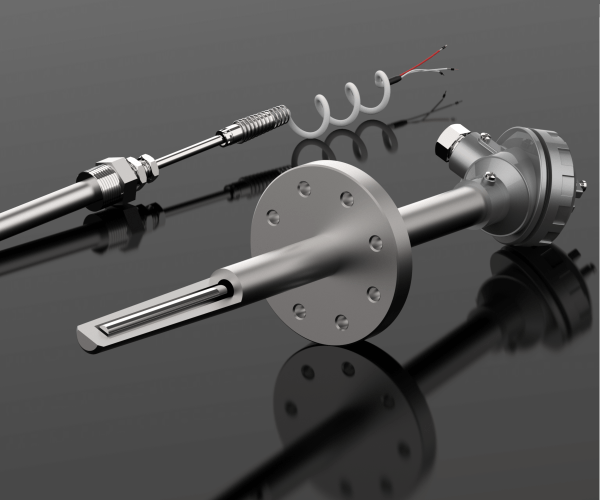
In most applications, the temperature is a parameter that requires constant observation. This is so because a particular application’s operation is temperature-dependent. In order to ensure that the ideal temperature is always maintained, monitoring is crucial. Buy a high-quality RTD for this specific function from a resistance temperature detector manufacturer. As the temperature changes, the resistance value of the metal wire resistor that makes up the RTD’s functional element changes. Temperature changes may be precisely computed based on the difference in the wire’s resistance because the metal wire’s resistance is a known constant.

Are RTDs applicable to all applications?

No. Only temperatures up to roughly 900-1000°F (482-538°C) can be used with RTDs. Thus, thermocouple temperature measurement devices are often used in high-temperature mining, refining, and related industries. RTDs are also not frequently utilized in applications below 200°F (93°C), as bimetal or expansion thermometers are more cost-effective and can perform the same function.

Do RTDs have a place in HVAC applications?

Yes, it has been placed in HVAC applications. The ambient air temperature is measured with the RTD for HVAC. These sturdy, adaptable instruments can be used indoors and outdoors in humid or dry situations. In order to measure the temperature in air-conditioned spaces, cold storage spaces, warehouses, and grain silos, resistance temperature detector manufacturer provide a variety of RTD series that can be utilized for specific applications.

Can RTD sensors and transmitters be combined?

Yes, both can be combined for temperature transmitters. The Model T15 and Model T53 temperature transmitters are just two RTD-sensor-based temperature transmitters. When an RTD sensor is equipped with a transmitter, the temperature readings can be examined locally and delivered to a remote control point. Resistance temperature detector manufacturer provides a special report on Pressure, Temperature, and Level Measurement for Sanitary Applications for additional details on RTDs and temperature measurement in the food and pharmaceutical industries.

Which RTD types are employed in the sanitary sector?

Several RTD kinds will satisfy the unique demands of the sanitary industries. For hygienic applications in the food, pharmaceutical, and biotech sectors, RTD transmitters are created. Due to a replaceable measuring insert, pure temperature transmitters with the model number TR22 are easy to calibrate. The stainless steel head of this ground-breaking sanitary sensor may be cleaned from any mounting position.

Summing it up:

Ensure you only purchase temperature measurement equipment from reliable suppliers, especially RTD sensors. The Transmitter Shop offers a significant selection of ready-to-ship temperature monitoring instruments and related accessories from resistance temperature detector manufacturer.

Blog at WordPress.com.

Up ↑

Design a site like this with WordPress.com
Get started