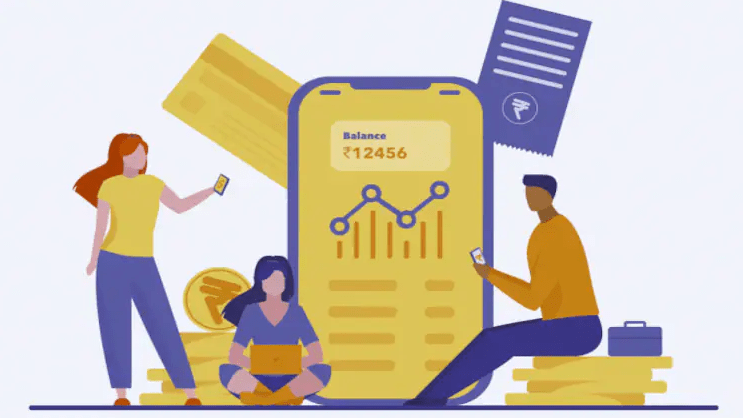
Let’s imagine this: When you started your job, you asked to open a bank account with a certain bank. You signed some sort of form and went again. You did the same for your second, third and Nth job. Now, you have multiple bank accounts to control your money. That’s where the account aggregator framework came into the picture.
Let’s start with the definition of Account Aggregators
RBI-regulated account aggregators collect financial data from banks, tax departments, and other financial information providers (FIPs) and make this information available to financial information users (FIUs) with customer consent. This allows investment firms and other FIUs to get the data they need to make informed decisions without having to go through each individual FIP themselves.
Importance of Account Aggregators Framework
With the rise of Fintech businesses that offer easy credit, it’s becoming more difficult to determine a loan seeker’s creditworthiness unless all data is readily available from every source the person has taken loans. Although the digital world has eliminated the need for physical paper workload, consumers are more likely to abandon the loan application. A recent study found that 70% of loan applications are abandoned before completion due to the time-consuming nature of the process. Additionally, scanned bank statements are more susceptible to fraud because data modifications are difficult to detect – even with a screen scraping program. This means that loan applications will require more human intervention to verify facts and weed out fraud, which will slow down the process and cause good borrowers to go elsewhere.
To address this problem, the Reserve Bank of India (RBI) has allowed the establishment of an Account Aggregator (AA) framework. The app would collect data from all loan providers in order to evaluate the legitimacy of loan applicants, reducing the number of lending scams.
Benefits of Account Aggregator Framework
Here are the detailed insights on how the account aggregators framework will be beneficial to the induvial and fintech institutions as well.
- The Account Aggregator network is extremely helpful when it comes to sharing financial information. This includes data like transactions, bank statements, various accounts with different banks, tax data, pension data, securities data (such as mutual funds and brokerage), and insurance data. Having all of this information in one place makes it much easier to keep track of and manage.
- This mechanism may help financial institutions more effectively assess a borrower’s creditworthiness, making better lending decisions and avoiding bad loans and non-performing assets. This is also projected to increase the number of borrowers for these organizations.
- By integrating secure digital signatures and end-to-end data sharing, AA will help to eliminate fraud that is usually connected with physical data sharing. Borrowers are completely aware of what they are committing to throughout the process and can revoke their consent at any time, ensuring that data misuse is avoided on both sides. With this system in place, both parties can be confident that the process is fair and transparent.
Anumati is the leading account aggregator- aa account app licensed by RBI that allows users to safely share the confidential data of their finances and helps to manage them properly. Download the app to learn about its fantastic features.
 Oliver Grey's Blog
Leave a comment