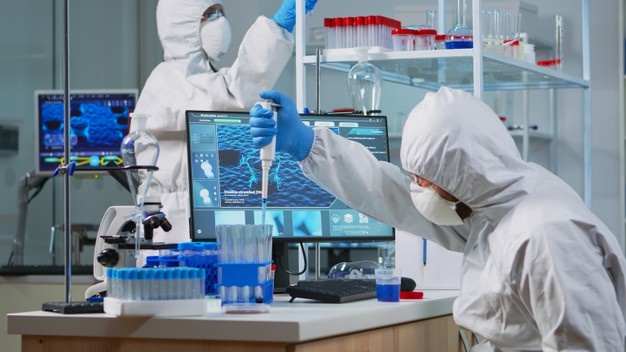
This testing method is one of the antiviral testing methods. Antiviral testing methods are helpful on various commercial and industrial products like plastics and other non-porous materials to check their capability and strength toward real-life viruses. This ISO 21702 test will measure the antiviral activity on those non-porous surfaces of the products already protected with an antiviral coating or the antiviral agents.
The main aim of this test is to check the capacity and strength of the antiviral coat or the agent coated on the product. ISO in the name of the testing method refers to the international standards organization. This testing method takes about two weeks to complete, and this method can work with eight different viruses and even work with additional viruses as per requirement. Like this test method, every test method is for various products, and each one has other test methods according to the product’s nature.
Different Viruses
Like all other testing methods, this testing method also uses various viruses like SARS CoV-2, Beta Coronavirus (OC-43) (ATCC VR-1558), Human Coronavirus (229E) (ATCC VR-740), Influenza A (H1V1) (ATCC VR-1469), Influenza A (H3N2) (ATCC VR-1679) for the testing process. Using these viruses creates a real-time situation and makes the virus react with the product treated with antivirals and check the outcome from that reaction to improve the product stability against these viruses. And makes the product immune to them.
Every virus needs different situations and surroundings to grow or develop. These testing companies create the required space in laboratories to activate the virus with total efficiency. All the antiviral testing methods use these viruses for their products and provide the necessary result from that reaction, but each technique will be different. These virus organisms are among humans, and these tests are basically to avoid or reduce their growth and spread among people.
Various steps of antiviral testing
The first step is to prepare nine control samples of 5cm x 5cm size and six test samples of the same 5cm x 5cm size. Sterilization is the second step in this ISO 21702 testing, and it requires 70 % ethanol for this process. The following process is inoculation. In this, the sample gets OC43, 229E, H3N2 and H1n1 viruses of 0.2ml, which is 107 PFU/ml. And the piece is placed between 4×4 clean film. Then the whole setup of all the film, viruses, and samples goes to the next step.
Incubation is the next step where the complete setup goes under 25 deg C for 24 hours without any external disturbances. Then it goes through the wash and shakes process; in action, add 20 ml of SCDLP to the existing product and shake it with your hands or put it in the vortex. Then the dilution and separation process takes place. Then the samples are placed in the well plates for further processing and then to add the dilutions to find the CPE of the different wells.
Antiviral testing methods
Most antiviral testing methods react with all kinds of real-time viruses to understand their abilities and fight against them. All the testing methods help improve the power of the products, antiviral agents, and coatings to improve to immune them against viruses. These antiviral testing are required to reduce the spread of viruses among people.
 Oliver Grey's Blog
Leave a comment